Showing posts with label Book of Praise. Show all posts

Friday, May 24, 2019

The hymn section of the Book of Praise

As published in Clarion (68:8, April 19, 2019) 


The editor asked me to write about the hymn section of the Book of Praise. We are primarily a psalm-singing church, but we also have hymns in our songbook, and likely we sing both psalms and hymns most Sundays.

Table of Contents

The table of contents for our hymns is found on page 356 & 357 of the Book of Praise (BoP). At present there are 85 hymns and what is good to note is that the songs are organized according to the structure of the Apostles’ Creed. In the early days the collection of hymns had no real discernible order. For instance, who remembers that the Apostles’ Creed (now Hy. 1) used to be Hy. 45? To arrange them according to the Apostles’ Creed was the idea of the late Rev. G. van Dooren, who served on the Standing Committee for the Publication of the Book of Praise (SCBP) for twenty-six years, 1954-1980.[1] It first appeared in 1979. The order is:

·         “We praise you, Father, Son, and Holy Spirit”
·         “With them his covenant he established”
·         “O come, O come, Emmanuel”
·         “The Word became incarnate”
·         “Christ Jesus full atonement made”
·         “Christ has risen! Hallelujah!”
·         “The LORD ascended up on high”
·         “He has come, the Holy Spirit!”
·         “Watch o’er your church, O LORD”
·         “Come, LORD Jesus! Maranatha!”
·         “Praise to the LORD, the Almighty”

To organize the hymns according to the articles of our catholic and undoubted Christian faith is good. Every Sunday we confess faith in our Triune God, and it is great to have our hymns organized accordingly. It also ensures a good balance to our hymn collection. The organization of the 150 psalms obviously suggests itself, but it is good to think about and be purposeful when it comes to organizing the hymns.

I suggested that it is a good way, but it is not the only way. Recently the Trinity Psalter Hymnal (TPH) was published. Its 425 hymns are organized this way:

·                      Worship
·                       Faith and Life
o   God
o   Jesus Christ
o   The Holy Spirit
o   The Church
o   Salvation
o   The Christian Life
o   Special Topics
·                    Service Music

Both structures are good. Without quibbling about which is better, perhaps it could be said that while the TPH follows a systematic or thematic method of organization the BoP takes a synthetic and historical approach intentionally following the order of the Apostles’ Creed, from God and creation to God and consummation.

Canticles and Hymns

Our collection of hymns includes quite a number of “canticles.” According to a strict definition, canticles are songs based upon parts of scripture which are not psalms. There are 31 such songs in our hymnary. The clue as to whether a song is a canticle is that in the case of a canticle a text of scripture is printed under the title. For instance, if you look at Hy. 17, The Song of Mary, you will see “Luke 1:46-55” included. That easily identifies it as a canticle.

It is good to sing canticles for then too we know that we are singing words put into our mouths by God himself.

The singing of hymns has, from time to time, proven to be contentious. John Calvin’s Genevan Psalter, 1562, besides the 150 psalms included only four canticles: The Ten Commandments and the songs of Mary, Zechariah, and Simeon.[2] There are Reformed churches which allow only the psalms to be sung in the Lord’s Day worship services. The Reformed Presbyterian Church of North America and the Free Church of Scotland (Continuing) follow this strict application of the “Regulative Principle.”[3] The introduction of the singing of hymns has, historically, been one of the reasons for church secessions. For instance, it was one of the complaints that led to the Dutch Secession (“Afscheiding”) of 1834. On the North American side, such introduction was one of the causes for a secession from the Reformed Church in America and the subsequent formation of the Christian Reformed Church in 1857.

What are we to say about the singing of hymns? Is it allowed? Since the establishment of the Canadian Reformed Churches we have allowed also the singing of hymns. Hymns, as well, are an important way for us to sing praises to our God. We live in a covenant relationship with our God in which he extends the gospel to us and in which we respond with faith, praise, and obedience. The writing of hymns is part of our covenant response of praise to God. In the new covenant we are no longer little children who can only speak God's words after him but adults who can think and respond in a grown-up way.

The hymns in our collection have various sources that span the centuries. Some are based on ancient Christian texts, such as the Apostles’ Creed (Hy. 1 & Hy. 2) and the 4th century Apostolic Constitutions (Hy. 6); others on our confessions, for instance Heidelberg Catechism, Lord’s 1 (Hy. 64); another on an apocryphal text, Ecclesiasticus 50:20-24[4] (Hy. 85); many others are free poetic songs based on Christian themes and motifs; a number of others are based on various benedictions and doxologies.

Principles and Guidelines

General Synod 2001 gave the SCBP the mandate to increase the hymnary. At that time we had 65 hymns in the BoP. To help fulfill this mandate Principles and Guidelines were crafted,[5] which were approved by Synod 2004 and then given back to the SCBP and the churches to guide us in the selection of hymns (please see sidebar).  

In the process of augmenting our hymnary the committee was guided by two criteria: first, the proposed hymns had to meet the adopted principles and guidelines and, second, they would have to fortify those parts of the collection that, possibly, needed strengthening. A careful inventory was performed of the several categories, and it was deemed that seven of them should be augmented.

This was a significant process in which the SCBP involved the whole federation of churches. First letters were sent to the churches asking for suggestions. In the meantime the SCBP made a careful assessment of the hymns we already had. The hymns the churches recommended were then evaluated according to the principles and guidelines.

The General Synod had also given the committee the mandate to examine the 150 psalms and to revise where necessary. The committee used the good services of Dr. William Helder for this.

Two sub-committees were appointed by the SCBP: one consisting of members from the Carman and Winnipeg churches to evaluate the hymns, and another made up of members from Fraser Valley churches to assess the revised psalms. These sub-committees gave advice to the SCBP which was used to made recommendations to the subsequent General Synod, which led to the Authorized Provisional Version in 2010. The churches were invited to give feedback to the SCBP which, upon further evaluation, led to the “final” version in 2014, the songbook from which we currently sing.

Is it a perfect product? No, but it is, in my estimation, a very good product, one that is accepted and loved by the membership of the churches. By effectively turning the whole federation of churches into one large super-committee all were able to take ownership of the Book of Praise.

Where to from here?

The BoP, although it is a good product is neither perfect nor complete, hence the word “final” a few lines back was put in scare quotes. Our present BoP is the “final version” …… for now. The last hymn has not yet been written or sung. The work of writing new hymns will, and should, continue until the return of our Lord Jesus on the clouds of heaven. There is room for improvement to and expansion of our current collection. Some disappointment has been expressed that not more of the classic English hymns have been included. Perhaps we should add them. Or some newly written hymns could be included.

This was recognized by our most recent General Synod. It noted that there has been a long-standing practice of having the churches directly address the SCBP with suggestions for improvement and augmentation of our songbook. The synods have recurrently mandated the SCBP “…to receive, scrutinize and evaluate the contents of correspondence from the churches and report to the next General Synod as to the validity of the suggestions made.” And further “…to seek, receive, evaluate and recommend proposals for changes to the hymn section to be compiled for possible submission to a future Synod” (Article 122 of General Synod Dunnville, 2016).

Getting practical

How ought this to be done? The consistories could appoint committees to ask their congregations for suggestions. The committee can then evaluate the suggestions according to our adopted principles and guidelines and advise their consistory. Attention should also be paid to whether the proposed song “fits” within our present Apostles’ Creed structure. Several years ago the SCBP recommended the inclusion of two marriage hymns (Augment, 2007); however, it was thought that since the BoP is primarily meant for the worship services, it ought not to be “cluttered up” with songs obviously meant for other occasions and that, therefore, would not be sung in worship services. Arguably, marriage hymns, as beautiful as they may be, do not really fit into the present organization. As long as we are using the structure of the Apostles’ Creed, attention should be paid to this by members, committees, and consistories. It would be helpful to state in one’s proposal where the song fits. Once the consistory has reviewed their committee’s work it can make a proposal to the SCBP which will, then, evaluate all the proposals to make recommendations to a General Synod and, via it, to the churches.

It has been said that ecclesiastical mills grind slowly, and also that one person does not, necessarily, always get his way.[6] Liturgy, although it must be based on biblical and confessional principles, is always somewhat of a compromise. We need to give and take a bit all-the-while honouring each other and thinking the best of one another. In the meantime, let’s sing our psalms, canticles, and hymns to the praise and glory of our King!


Notes:
[1] Br. M.M. de Groot, sr., also served from 1954-1980.
[2] Premier Printing has published the New Genevan Psalter consisting of the 150 Psalms and these four canticles. It is a contemporary English version of the original 1562 edition. See www.newgenevanpsalter.com Available from books@premierpublishing.ca.
[3] The regulative principle of worship is the doctrine that God commands churches to conduct public services of worship using certain distinct elements affirmatively found in Scripture, and conversely, that God prohibits any and all other practices in public worship.
[4] Ecclesiasticus 50:20-24—“And now bless the God of all, who everywhere works great wonders, who fosters our growth from birth,  and deals with us according to his mercy. May he give us gladness of heart, and may there be peace in our days in Israel, as in the days of old.  May he entrust to us his mercy, and may he deliver us in our days!” (NRSV).
[5] In those days the SCBP was working together with the songbook committee of the URCNA towards a “common songbook.” Alas, the project died in the cradle.
[6] Lieverkoekjes worden in de kerk niet gebakken.  J


PRINCIPLES AND GUIDELINES FOR THE SELECTION OF MUSIC IN THE CHURCH

INTRODUCTION

The Canadian Reformed Churches and United Reformed Churches entered into "Phase Two" of ecumenical relations, effective January 1, 2002, with the goal of eventual federative unity. The synods of those two federations mandated their respective committees to labour together to recommend to the churches a common songbook that would be faithful to the Scriptures and our Reformed confessions.

PREFACE

The Bible is filled with references to singing. From the very beginning God's people have responded to His grace, almighty power and presence with song. The songs of the Church are, essentially, prayers to God. They are filled with praise and thanksgiving, sorrow for sin and petition for forgiveness, and prayers for intercession in behalf of others in Christ. They also include instruction and exhortation. Thus the songs of the Church express the entire spectrum of the Christian's experience. While every believer may find personal expression of praise, thanksgiving, petitions, and repentance in song, and while we encourage the families of our churches to make use of the songbook in family devotions, the principle purpose for which this songbook is being developed is for congregational singing. The Psalms and hymns are being selected with the prayer that they may express and enrich our congregational worship of God.

Psalm 66:2 ‑ "Sing out the honor of His name; make His praise glorious."
Ephesians 5:19 ‑ " . . .Speaking to one another in psalms and hymns and spiritual songs, singing and making melody in your heart to the Lord."

PRINCIPLES:

THE SONG OF THE CHURCH IS TO BE SUITABLE FOR THE CHURCH'S WORSHIP TO THE GLORY OF GOD

1. The songs of the Church are to be scriptural
In content, form, and spirit the Church's songs must express the truth of the Holy Scriptures. Augustine, referring to the singing of Psalms, said, "No one can sing anything worthy of God which he has not received from Him . . . then we are assured that God puts the words in our mouth."

2. The songs of the Church are to be a sacrifice of praise. [Hebrews 13:15]
Singing is an important element of the congregation's response to God's redeeming work in Christ Jesus and the Word proclaimed in the worship service.
John Calvin wrote, "Singing has great strength and power to move and to set on fire the hearts of men that they may call upon God and praise Him with a more vehement and more ardent zeal. This singing should not be light or frivolous, but it ought to have weight and majesty."

3. The songs of the Church are to be aesthetically pleasing
The songs for worship are to be a beautiful blend of God‑honoring poetry and music. [Psalm 92:1-4]

GUIDELINES FOR SELECTING SONGS:

1.       The songs of the Church must be thoroughly Biblical. They are to represent the full range of the revelation of God, Father, Son and Holy Spirit. [Psalm 147:1]
2.       The Book of Psalms is foundational for the Church's songs. Therefore, all of these Psalms, in their entirety, ought to be included in the Church's songbook.
3.       When Psalms or other portions of Scripture are set to music, the words must be faithful to the content and form of the inspired text. [2 Timothy 3:16]
4.       In the case of songs other than the versification of Scripture, the words must faithfully express the teaching of Scripture [Proverbs 30:6] as summarized by our Reformed confessions.
5.       The songs of the Church must be intelligible [1 Corinthians 14:15] and edifying to the body of Christ. [Colossians 3:16]
6.       The songs of the Church must reflect and preserve the language of the Church of all ages rather than accommodating current secular trends. [Romans 12:2a]
7.       In content and form, the songs of the Church must be free from artificiality, sentimentality, and individualism.
8.       The music of the song should suit the text.
9.       The music of the Church should be expressive of the Reformed tradition. Use is to be made of the music developed in the tradition of this rich heritage.
10.    The music of the Church should not be borrowed from music that suggests places and occasions other than the Church and the worship of God. [Ephesians 5:18-21]
11. The melodies and harmonies of church music must be suitable for congregational singing, avoiding complicated rhythms, excessive syncopation, and a wide range of pitch.


Saturday, May 21, 2016

Task is finished

http://bookofpraise.ca/images/StandardEdition.pngAfter fifteen years serving as chairman of the Book of Praise Committee, I completed my term this past Friday--in fact, more than my term. A normal time on a Canadian Reformed synodical committee is nine years, but since we were in the midst of a large project in 2007, revamping and augmenting our songbook, it was felt that I should stay on an extra six years. I loved the work! I laboured beside wonderful brothers and sisters, and experienced only kindness, good cooperation, generosity, and mutual respect. 

We also worked for a number of years with our URCNA counterparts and were well on our way to proposing a hymn section for the "Common Songbook" to our respective synods. However, a few synods back, the URCNA changed direction and began working with the OPC instead. We were saddened by that, but I wish them well as they work to produce the "Trinity Psalter Hymnal." I look forward to seeing the final product.

I pray God may be with the current committee, and may the Book of Praise be used weekly and daily in church, school, and home to help God's people praise the Lord with psalm and hymn!


Thursday, May 19, 2016

Address to General Synod Dunnville


Yesterday I had the privilege of addressing Synod and of presenting the third edition of the Book of Praise to the churches on behalf of the Standing Committee for the Book of Praise. Here is a video recording of my speech in which I also relate some of the history of our songbook.

Monday, November 10, 2014

The New Book of Praise

(As published in the recent issue of Clarion)

The New Book of Praise

George van Popta

At long last, the new Book of Praise is printed and ready for shipment to the churches. Orders are being sent in to the publisher, and soon we will all be singing from the 2014 version. This is the third complete edition, after the 1984 and the 1972 editions, and the hope is that it will serve the churches for many years.
The committee is thankful for the tremendous amount of feedback, encouragement, and cooperation it has received from the churches throughout the past thirteen years, as well as the good guidance and leadership given by the General Synods convened during this time. Above all, praise and gratitude is due to our heavenly Father for providing the churches with a songbook that will be used weekly and daily, in church, school, and home, to praise his most holy Name.

Roots
The Book of Praise is rooted in our Reformed past. The first complete Genevan Psalter was published in French in 1562, and since then versions have appeared in many languages used by churches throughout the world.  When our parents and grandparents landed on these shores with the waves of immigration from the Netherlands after the Second World War, and felt obliged by the Lord to establish the Canadian Reformed Churches, they also felt strongly led to produce an English version of the Genevan Psalms. They had been singing them in Dutch all their lives and were not inclined to give them up. Acting in faith, some may say, audaciously, the far-flung federation of a handful of churches set out in the 1950s to produce an English Calvinistic songbook where the Psalms were to be set to the beloved Genevan tunes and which would also include hymns faithful to scripture. We are the heirs of our fathers’ vision.

2001 to 2013
The Standing Committee for the Publication of the Book of Praise of the Canadian Reformed Churches (yes, that is its real name; “SCBP” for short) received from recent synods the mandate to add some more hymns to the 65 of the 1984 Book of Praise, to revise and improve the Psalms, and, recently, to amend all the Biblical text references to the ESV (from the NIV). From the perspective of the SCBP it was an interesting task. It could be said that the whole federation was turned into a huge super-committee as the work progressed over the years from Synod 2001 to Synod 2013.
The most significant part of the work was the revision of the 150 Psalms. About fifty of them required little revision, about fifty needed some revision, and about fifty were completely redone. The SCBP was able to engage Dr. William Helder for this work. Many will know that Dr. Helder has been involved with the Book of Praise for many years. In his work, Dr. Helder did not especially use any one English translation of the Psalms; rather, he used a large number of English, Dutch, German, French, Latin, and other translations. At times ministers on the committee would give him a literal translation of the Hebrew from which he would then work, and the Hebrew scholars at CRTS were always ready and willing to help.
In 2010 Synod Burlington instructed the SCBP to publish an Authorized Provisional Version (APV) which the churches were then to use for three years and submit comments on to the committee. The result of this three year “test-drive,” comments to the committee, the report of the SCBP to Synod 2013, and the decisions of the Synod, is the new edition of our songbook.
  
APV to 2014 edition
To become more particular, the differences between the APV, 2010, and the new, 2014, edition can be summarized thus:
1.) Changes to the Psalms:
a. In about 20 stanzas in the Psalm section some words, or a couple of lines, have been changed as
compared with the APV.
b. In Psalm 17 significant changes were made to the text of stanza 5.
c. Psalm 25:6 was replaced with entirely new text.
d. Psalm 81:6 was also replaced with entirely new text.
e. In Psalm 90 the first stanza has been changed back to the 1984 version and the second stanza has been deleted. Consequently this Psalm is significantly different from that found in the APV.
2.) Changes to the text of the hymns:
a. In about five stanzas some words, or a couple of lines, have been changed as compared with the APV.
b. The lyrics of Hymns 58 and 77 have received significant and substantial changes.
3.) Changes to the melodies of the hymns:
When the SCBP, in the APV, returned many of the melodies to their original composition, some churches objected to the changes. The Committee, being sensitive to these objections and not wanting the music of the Book of Praise to be a divisive issue, recommended to Synod 2013 that some of the corrections be undone. Synod adopted these recommendations and added others as well. Undoubtedly, the local organists will point these out to their respective congregations.

Incompatibility
Once a church has decided to adopt the new edition for use in the worship services it will not be possible for members to continue using the APV. The significant changes to the text of the Psalms and hymns as well as to the melodies of the hymns make it impossible to use the two versions together without creating confusion in the worship service. Using both songbooks at the same time to sing would be unedifying for the worship service because of the difference in some lyrics. Similarly, the changes to music, rests, and fermatas in some of the hymns would also be a cause for unnecessary confusion. Further, due to content and formatting changes in the 2014 Book of Praise, the page numbering in the two editions is no longer the same. The APV and the new edition are not compatible.

Digital
Premier Publishing has also produced a digital version (a tagged PDF) which can be bought and downloaded from http://bop.premierprinting.ca. This version is suitable for tablets and smartphones.
A few churches project the text of the Psalms and hymns in the worship service. While the SCBP had originally expected that the tagged PDF would be suitable for this use, some have indicated that this may not be the case. The SCBP will be discussing this at its Fall meeting and is committed to accommodating the needs of the churches that make use of projectors.

Thankfulness
The SCBP is thankful that the Book of Praise continues to be a blessing to the church of Christ. Above all, may our God be “enthroned on the praises of Israel” (Psalm 22:3) also through the use of our songbook. To him alone be all glory, now and forever!

Rev. George van Popta has served as chairman of the SCBP since 2001 and is due to retire from the committee in 2016.


Wednesday, October 29, 2014

Thursday, July 17, 2014

2014, Book of Praise

A thirteen-year journey comes to a close with the soon-to-be published 2014 edition of the Book of Praise. Please see this blog post over here. I have been chairman of the Book of Praise committee since General Synod 2001. I have loved the work and am happy to see the committee's work soon to bear the fruit of the third complete edition of our songbook. I pray it may serve the churches well for many years!

Saturday, March 12, 2011

New Book of Praise (6)

From the Jubilee bulletin, 3/13/11

The new Book of Praise (6)
Hy. 10–Now Blessed Be the LORD our God

The new Book of Praise includes nineteen of the twenty-eight songs of the 2007 Augment. Last week I began with giving a brief introduction to each of these new hymns in the order in which they appear in our hymnary.

Hymn 10 is a doxology based on the last verses of Psalm 72. Each of the five books of the Psalms ends with its own doxology. Book II (Psalm 42-72) concludes with such a doxology:
Praise be to the LORD God, the God of Israel,
who alone does marvelous deeds.
Praise be to his glorious name forever;
may the whole earth be filled with his glory.
Amen and Amen (Psa 72:18,19).
This two stanza hymn closely follows the words of the biblical text. It is cast in the berakah (“Blessed be”) form common in Jewish worship.

The tune, CORONATION, was composed by Oliver Holden (1765-1844). It is a vigorous marching tune with many delightful repeated tones. The tune calls for the final couplet of the text of both stanzas to be jubilantly repeated.

Holden was reared in a small rural Massachusetts community. He had only minimal formal education–a few months of school. He worked, in turn, as a carpenter, a merchant, and a real estate agent. He also served in the Anti-Slavery Society, in the Massachusetts House of Representatives, and as a Puritan lay preacher. Always interested in music, Holden became a composer and singing-school teacher. He helped to publish several tunebooks.

Sources: Psalter Hymnal Handbook; Internet
~gvp

Sunday, February 27, 2011

New Book of Praise (4)

From the 2/27/2011 Jubilee Bulletin

The new Book of Praise (4)

Last week I mentioned that the music of some of the hymns was changed a bit. In some instances, it was changed significantly. Why change? Was not the old good enough? We are not comfortable with change. Why not leave well enough alone?

Well, what are the changes to the music of the hymns?

The breathing marks (commas) have been removed. These were not part of the original composition. At some point, they were applied to the hymns, albeit inconsistently. In one case (the old Hy. 46) they were in exactly the wrong spot in every occurrence–and we never noticed! The breath marks were redundant. People know how to breathe :-) and it is the task of the accompanist to play in such a way that the congregation can sing comfortably.

As well, some of the quarter and half note rests have been removed. In this the committee endeavoured to present the music the way it was originally composed and as it is found in most other hymnals.

You may have noticed that Hymn 31 has an “A” version and a “B” version. The “A” version is the way the music was originally composed. It is lively, rhythmic and uplifting, completely appropriate for a song celebrating the resurrection of Christ. At some point in the history of the Reformed churches, dare I call it “the puritanical era,” such liveliness was frowned upon and the melody was converted to all notes of equal value. The committee restored the old version while it also retained the newer version to which we are accustomed (the “B” version).

Hymn 48 (old 37) has a new tune. The tune we are used to is very beautiful but was intended for a Lent hymn whereas “Come Praise the Holy Spirit” is a Pentecost hymn. The committee felt that the new tune was more fitting to a song for Pentecost.

How shall we introduce these changes? Next week, the pastor, the accompanists, and the choir director are going to get together to make sure all are clear on the changes. After that, we will ask the congregation to stay behind for a half hour or so after a PM service while we sing through the songs. Until then, we will continue to sing these songs in the way we are accustomed.
~gvp

Saturday, February 19, 2011

New Book of Praise (3)

From the 2/20/11 Jubilee bulletin

The new Book of Praise (3)

When it comes to the hymns of the new Book of Praise, you will notice several changes. There has been a modest expansion to eighty-five hymns. When General Synod Neerlandia gave the committee the mandate to consider such an expansion, and when the committee then completed a survey of the then current hymnary, it was rather surprised to notice that there were only four hymns specific to the resurrection of Christ. This was surprising considering that the resurrection victory of our Lord Jesus Christ over death, sin and Satan is the high point of our faith and worship. We celebrate that not only on Easter but on every Lord’s day. The number of Easter hymns has been doubled to eight.

The expansion of the hymnary implied the renumbering of the hymns. Some have asked why the hymns of the Augment that were included could not just have been added to the end as numbers 66-85? This could not be done as it is important to keep the topics in order and the hymns of each topic together. For the topical index, please see pages 356-57.

Many of the hymns have been modernized by changing the pronouns referring to God from archaic to modern though just as many have been left untouched. What were the criteria? It is difficult to be flawlessly consistent, but the intention was to leave classic hymns alone while the committee felt free to update hymns that were created by our own poets or which are canticles (i.e., songs based on passages of scripture other than Psalms). Hymns protected by copyright may not be altered. As examples, I can mention the following:

1. “O God, our Help in Ages Past” is a classic hymn that ought not to be altered.

2. “Blest be the God of Israel” is a canticle, and so the committee felt it could be updated.

3. “Great is thy Faithfulness” is protected by copyright and, thus, may not be altered.

The music of a few of the hymns has also been changed, but I will write about that next week.
~gvp

Sunday, February 13, 2011

New Book of Praise (2)

(From Jubilee Bulletin, Feb. 13, 2011)

You will notice that the convention of italicizing some of the words or syllables has been continued in the new Book of Praise (non-first stanza stanzas). This is to help the singer know whether the note is a half or a quarter: syllables set to quarter notes are italicized.

Pronouns referring to God follow the practice of the modern Bible translations we now use, which means that “thee” has been changed to “you.” As well, all the pronouns are in lower case.

One other change in the songs is that capital letters are no longer used at the beginning of every  line; rather, they are used at the beginning of the sentences. A capital letter at the beginning of every line is an older poetic convention which intrudes into the flow of thought of what is sung.

As we use the new songbook you may notice that some songs have a stanza or two less while some have one added. In such cases, either the stanzas had too much filler when compared to the biblical text, or some elements from the text were missing.

You will also notice that some Psalms were radically altered while others were not. The whole project of revising the Psalter was divided into thirds: one third was deemed good as was; one third needed  only small adjustments; one third warranted rewriting.

I think that covers what needs to be said about the Psalms. Reformed believers have been singing from Genevan Psalters for a long time. Next year will be the 450th anniversary of the first complete Genevan Psalter and today it appears in many languages. It is a jewel and we are thankful that we may use it in fresh modern English.

If you have a question yet about anything to do with the Psalms, please ask me. Next time I will write something about the hymns.
~gvp

Sunday, January 30, 2011

The new Book of Praise (1)

(From Jubilee bulletin of 1/30/11)

Today we will begin using the new Book of Praise in our worship services. I thought I would begin a series of short articles introducing the new book, about how it differs from the 1984, the current, version.

Before we consider the changes, we should note the similarities, for in every way it is still the songbook with which we are familiar. It contains the hundred and fifty Psalms, a collection of hymns, the creeds, confessions, forms, prayers and church order. However, there are some changes and improvements that would be good to note.

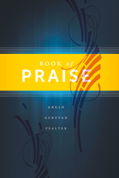
The first change you will notice is the size. The dimensions have increased a bit from 4.5” x 6.75” to 5.5” x 8.5”. These new dimensions give the book a more pleasing appearance and the text of the songs is a little larger. The very observant will feel that the paper is of a slightly finer quality than the previous edition.

If you look at Psalm 1, you will see written at the top of the page “Book 1” and “Psalms 1-41.” The Book of Psalms is divided into five books, and this is now made obvious in the songbook. See also above Psalms 42, 73, 90 and 107.

Above the text of many Psalms in the Bible, you will see a “superscription” which may mention the human author of the Psalm, or the circumstances surrounding its writing, or some musical notations. Where these are present in the Bible they have been included in the songbook. See, e.g., Psalm 3. Understanding something of the Psalm’s original context will be fruitful for singing it today.

If the song is a longer one so that you must turn the page, the music is, again, provided. See, e.g., Psalm 9. When the Psalm number is above the first stanza, it is centred but when it is at the top of a page containing other stanzas, the indication is off centre to the right or left margin. When you see the reference is off centre, you will intuitively know it is not stanza 1 and your eye will drop down to see at which stanza you are. At least, that is the theory, and a human factors engineer will be able say if the committee got it right.