Showing posts with label church. Show all posts

Tuesday, April 25, 2023

"My" Churches

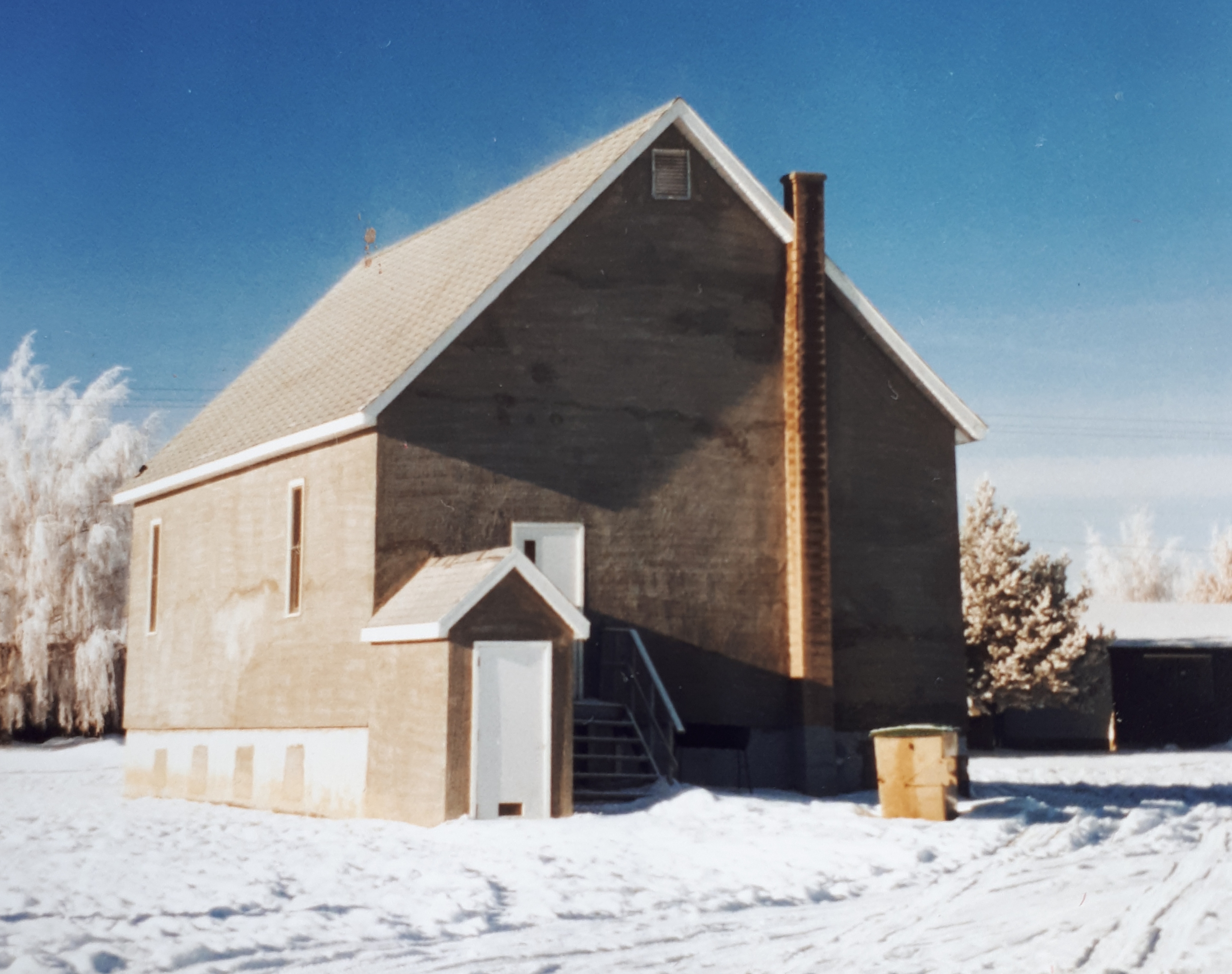
I was ordained to the ministry of the Word and the Sacraments on October 11th, 1987 as the minister of the Canadian Reformed Church in Ottawa (this church would later assume the name "Jubilee" on its 50th Anniversary). I served here for five years. The congregation was, at that time, renting Merivale United Church, an historical building whose history goes back to 1876. (Click here for the history of the building). Among other interesting facts: Sir John A. MacDonald, Canada's first prime minister, laid the cornerstone of MUC. 


Surrounded by graves


A lovely building . . .


. . . with notoriously uncomfortable pews


I was ordained by the late Rev. Johannes Mulder, "father," mentor, and friend. Here we are standing in front of Merivale Church.


In 1992 I was called by the Canadian Reformed Church in Taber, Alberta. When I came, this recently instituted church was worshiping in Parkside Manor, a seniors recreation centre. 


After a year or two we moved our services to a building owned by the "Benevolent Protective Order of the Elks" where I preached under the serene gaze of three elk heads. (I wonder how protected these three elks felt. . . .)


For several years I preached in the ugliest building in the federation of churches. But we had some beautiful Sundays there. Once I baptized four children in the same service. We were wall to wall people!


Then we built a lovely church building. I preached and taught here with great pleasure. Taber still worships here.


In 1997 I was called by Ancaster Canadian Reformed Church, which I served for eleven years.


A beautiful building.


In 2008 my first congregation, Jubilee-Ottawa, called me back. I served there until 2016, when poor health led me to request the status of Minister-Emeritus. Though we moved to Hamilton I happily remain a minister of Jubilee Church.


I preached my farewell sermon on a steaming hot summer Sunday in a building with no air conditioning.


Final exhortation.

Jubilee Church, forever in my heart.


Saturday, October 27, 2018

Authority (8): abuse of authority


In the state

Sadly enough, it happens that some who are in positions of authority abuse their power and position. Governments do. There are governments that oppress their people. We can think of the communist regimes of Stalin and Mao Tse Tung. Every November a Sunday is declared the International Day of Prayer for Persecuted Christians. In many Asian and North African countries, Christians are persecuted for their faith. They are oppressed by the state. Clearly, such governments are abusing their authority. God will hold them to account for this and will punish them for it.

In churches

This abuse of authority also happens in churches. In the 1500s, church reformers called the Medieval church back to the Word of God. Through the centuries, the church had strayed far away from the simple but true message of Scripture. The church had added all sorts of doctrines not found in the Bible. On top of that, many of the church leaders were living godless lives. The reformers called the church back to the Bible and away from false doctrine and permissive living. What was the reaction of the church? Persecution! Excommunication! Death by burning at the stake!

The church assigned more authority to itself and its ordinances than to the Word of God. It refused to submit itself to the rule of Christ. It persecuted those who lived holy lives according to the Word of God and who rebuked it for its sins and false doctrine. The church of the Middle Ages would not take it. It used—or rather—it abused its power and authority to silence those who called it to faithfulness and submission to God's Word.

This example, which led to the Reformation of the church, is not the only example of the abuse of ecclesiastical authority. Throughout history, there have been many instances of churches abusing their authority, misusing their power, to silence those who would live godly lives and call a disobedient church back to the Word. The history of the Canadian Reformed Churches, which goes back to the Netherlands, bears this out.

In families

Abuse of authority does not only happen in the state and the church; it is also, sadly, found in families. All physical, verbal, and sexual abuse by someone in authority perpetrated against someone under authority is abuse of authority. We wish we could say that this does not happen among Christians and in the church, but we would be lying.

What must someone suffering abuse do? He or she needs to go to someone else in authority for help. We are all under several spheres of authority: the authority of parents, teachers, the police, and elders in the church. An abused person must go to someone else in a position of authority for help. The abuser must be brought to justice and face the just consequences of his crime. He must be brought to repentance at the foot of the cross of the Lord Jesus Christ. It is only when we fall broken at the foot of the cross that we are reconciled to God and that we can be reconciled to one another.

(The final post in this series deals with the rejection of authority.)


This series of blog posts were originally presented as a speech at the October 1998 Ontario Women's League Day in Ancaster, Ontario. Much of the spoken style remains.


Tuesday, October 23, 2018

Authority (4): the church as an agent of authority


But God does not only approach us via our parents. He also draws near to us through the church. The Lord Jesus Christ has vested authority in the church. This authority is, first of all, to preach the gospel. The church is Christ's preaching agency. Before He ascended to heaven, the Lord Jesus Christ sent his disciples out to preach the good news about salvation in his name and to teach people how to live in obedience to his will. He said to them: "… go and make disciples of all nations, baptizing them in the name of the Father and of the Son and of the Holy Spirit, and teaching them to obey everything I have commanded you."

The apostles took this command seriously. They themselves went out into the world preaching, discipling, baptizing, and teaching. Before they died, they trained others to preach. They told those they trained to train, in turn, others. In the last letter he wrote before he died, the Apostle Paul wrote to Timothy, minister of the church in Ephesus: "And the things you have heard me say in the presence of many witnesses entrust to reliable men who will also be qualified to teach others" (2 Tim 2:2). Timothy, taught by Paul, had to teach others who would, in turn, be able to teach others.

And so to this day the apostolic message has been handed down through the church. The faithful church of Jesus Christ has continued to preach the good news about salvation in the Name of Jesus Christ.

Not only does the church have the authority to preach the Word of God (to those who are already members of the church and in the context of mission work to those who do not yet know Christ). Christ, the Head of the church, also gave the church authority to exercise discipline over the members of the church—over those under its care.

In Matthew 16, the Lord told Peter and the other disciples that He was giving them the keys of the kingdom of heaven, and that whatever they bound on earth would be bound in heaven, and whatever they loosed on earth would be loosed in heaven. The Lord hereby gave the church authority to announce guilt or innocence. If a member of the church is living in disobedience to the commandments of God, then the church has the authority to tell that person he stands guilty before God. And when a person repents, again, the church has the authority to declare that person innocent—innocent before God on the basis of the blood of Jesus Christ.

The Lord Jesus worked that out more—what in fact He was giving to the church—He worked that out a bit more in Matthew 18. There He said that if a member of the church refuses to repent of a specific sin, if he hardens his heart and holds on to that sin, if he loves that sin more than Jesus Christ and obedience to his word, then the church has the power, authority, and responsibility to excommunicate that person. To bar him from the rights and privileges of membership in the church, and to declare that he, because of his hard-hearted sin against God, because of his unwillingness to seek forgiveness at the foot of the cross of Christ, no longer has a place in the kingdom of heaven.

We have an example of this process at work in the New Testament. In his first letter to the church at Corinth, chapter 5, Paul said that it had been reported to him that there was a case of sexual immorality in the church that shocked even the pagan unbelievers of Corinth. The case was that a member of the church was living with his stepmother. This was a case of incest. As depraved as Grecian society was, apparently incest was almost unheard of. Here in the church at Corinth, there was a case of incest. A man was publicly living together with his father's wife—his stepmother. And the church did nothing about it. In fact, the church was kind of proud about how enlightened it was that it could tolerate such a thing.

Paul said to the church: Put this man out of your fellowship! He continued: "When you are assembled in the name of our Lord Jesus and I am with you in spirit, and the power of our Lord Jesus is present, hand this man over to Satan, so that the sinful nature may be destroyed and his spirit saved on the day of the Lord."

The church was to put this man outside, to excommunicate him, to hand him over to Satan. By expelling the man from the church, he would be thrust into the devil's territory, severed from any connection with God's people. The purpose was not only the preservation of God's good Name, but also that by being officially ostracized from the church, the man would experience such anguish that he would repent and forsake his wicked way.

So you see, do you not, that the authority to discipline that Christ gave his church is remedial? It is meant to reconcile the sinner to Christ and the church. All discipline is meant to be therapeutic. You can make the analogy with discipline in the family. It is supposed to be healing. Administered in a firm but loving way, it brings correction. Sadly, discipline is sometimes administered in a cruel, abusive and destructive way. That is no longer discipline. That's something else. It's abuse. We will turn to that painful topic in a future issue.

The point is that discipline in the family and in the church is meant to bring healing and correction—to reconcile the sinner to God.

(The next post will be about the state as an agent of authority.)


This series of blog posts were originally presented as a speech at the October 1998 Ontario Women's League Day in Ancaster, Ontario. Much of the spoken style remains.

Tuesday, March 13, 2018

Contact with the FRCNA

The Clarion magazine issue of March 9, 2018, has a report about the recent meeting of the International Conference of Reformed Churches (ICRC) held in Jordan, Ontario. Among the many interesting things reported is a note about the four delegates of the Free Reformed Churches of North America (FRCNA) approaching the four Canadian Reformed (CanRC) delegates with the question why the FRCNA and the CanRC are no longer talking (at the level of synod and/or ecclesiastical committee). It led to the eight brothers having lunch together and agreeing that more formal effort should be put into connecting with each other. Talks petered out long ago and the eight brothers agreed it was time for them to be resumed.

This is great news. The FRCNA and the CanRC are both members of both the ICRC and the North American Presbyterian and Reformed Council (NAPARC) At the grass roots level we have come to know each other better through organizations such as ARPA and CARDUS. Hopefully we will, before long, officially recognize each other for what we surely are, sister churches. That will smooth the way for acknowledging one another's preaching, worship, and discipline as faithful to the Word of God.

We live in a post-Christian context where we increasingly need one another. We hope the brothers who met informally will be able to encourage our respective ecclesiastical contact committees to reach out to one another and to submit good recommendations to the two synods. May God bless the new talks and contact for the edification of the church of Christ!

Wednesday, July 05, 2017

The pillar and foundation of the truth

In 1 Timothy 3:15 the Apostle Paul speaks to what the church must preach and to how people ought to conduct themselves in the church. He uses several names to describe the church: he calls it a household, and the pillar and foundation of the truth.

These are architectural terms. A house needs a foundation and pillars. In the time of Paul if one were going to build a house, he would first dig in the ground to lay the foundation. On the foundation he would erect pillars, and these pillars would hold up the roof. The pillar and foundation had the same function: to hold up that built upon it. Today we would still need first to lay a foundation, either of concrete blocks or of poured concrete. And upon that we then erect studs to hold up the upper stories and the roof. (I write this as one who has never been involved in any aspect of the building trades, so I hope I'm reasonably accurate.)

Image result for foundation stones
Fountation
The broader context of 1 Timothy 3 is instructive and we need to look both ways, backwards and forwards. Looking backwards to the verses 1-13, we read that Paul mentions the qualifications for office-bearers in the church. Paul wrote this so that Timothy would know how the Christians of Ephesus were to "...conduct themselves in God's household, which is the church of the living God, the pillar and foundation of the truth. Elsewhere, scripture says that Christ is the foundation upon which we, the church, are built (1 Peter 2), but here the church is the foundation and the pillar. 

Related image
Pillars
Looking forwards to the following verse we see that Paul mentions a very brief Christian confession: He (Christ) was manifested in the flesh, vindicated by the Spirit, seen by angels, proclaimed among the nations, believed on in the world, taken up in glory. The church must proclaim this revealed truth about Christ.

It is important to note that the church is holding up the truth. The church does not define what the truth is; it holds up the truth defined by someone else. It is God who defines the truth, and the church is called to hold it up in the world. 

Just as we do not make up the truth of what the Christian confession might be, so we do not make up the truth about what the household rules should be. Both are part of God's revealed truth. 

Scripture tells us who are meant to serve as office bearers. Christ calls us all--old and young, male and female--to places of service in the church. Don't worry! You have been called to a place of service. Christ calls brothers to serve as pastors, elders, and deacons. Sisters he calls to tasks which men (at least, I speak for myself) could not do and for which they are wholly unqualified.

May God be with the church! We may not be condemnatory or judgmental, but we are required to observe, consider, and, at times, make judgments, also about whom Christ calls to serve as office bearers in the church. 

Thursday, June 22, 2017

Are the CanRC only ten or twenty years behind the GKv?

Our sister churches in the Netherlands, GKN-Liberated (GKv), recently decided at their General Synod to open the offices of minister, elder, and deacon to the sisters of their congregations. This unfortunate decision will do irreparable damage to their relationships with many of their sister churches worldwide. The GKv is a member church of the International Conference of Reformed Churches (ICRC); I cannot imagine that many of the other member churches will be content to let the GKv retain the privileges of membership.

The Orthodox Presbyterian Church (OPC) and the Reformed Church in the United States (RCUS) must be experiencing deja vu. In the mid-1990s the Christian Reformed Church of North America (CRCNA) opened up the offices in their church to women. This became an issue in the North American Presbyterian and Reformed Council (NAPARC). At that time the CRCNA was a member church of NAPARC, but their opening of ecclesiastical offices to women led to their suspension in 1997. The OPC and the RCUS were already members of NAPARC then. Also, the CRCNA ordination of women was largely the catalyst for the formation of the United Reformed Churches of North America (URCNA), presently a member of NAPARC.

Are the Canadian Reformed Churches (CanRC) going to follow the GKv in this? Are we a mere ten or twenty years behind? Historically we have had rather close ties to the GKv. Technically the GKv is a sister church to the CanRC, but realistically, the GKv is our mother. Many of our parents and grandparents were born and bred in its bosom. Will the closeness and the ties be the undoing of the CanRC? Will it be only a few years before we see women in our elders benches and on our pulpits?

Although I have no crystal ball, I think the answer to those questions is No. I say that with some confidence because of which churches we associate with here at home, in North America. Not a one of the twelve other NAPARC churches ordains women. At least one of them (URCNA) formed largely because of the issue, and others (OPC and RCUS) have fought the fight against a liberal hermeneutic on several fronts and, by the grace of God, prevailed for the truth.

Possibly we have an advantage that the GKv does not have. We are in a circle of churches that maintains an explicitly Reformed hermeneutic, a circle that I do not think the GKv has on the European continent.

Let us, as CanRC, be cautious about the company we keep, and let us stay in step with our NAPARC associates.